
Epoxy vs Polyaspartic: Which Garage Floor Coating Is Worth It?
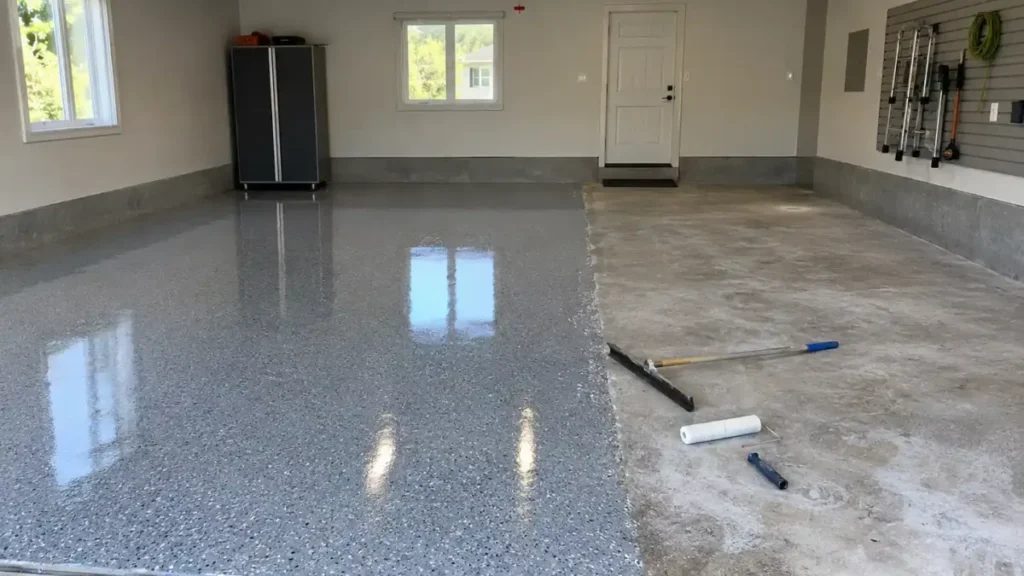
Polyaspartic garage floors cost about $1 to $3 more per square foot than epoxy, or roughly $500 to $1,000 more on a typical 2-car garage. In return you can walk on it the same day, park in 24 to 48 hours, and the top coat won’t yellow in sunlight.
In this guide
Polyaspartic garage floors cost about $1 to $3 more per square foot than epoxy, or roughly $500 to $1,000 more on a typical 2-car garage. In return you get a floor you can walk on the same day and park on in 24 to 48 hours, a top coat that won’t yellow in sunlight, and a more flexible finish that handles heat and cold better. Epoxy is cheaper, builds a thick, strong base, and remains an excellent choice for garages that don’t get much sun.
Many professional installers now use both: an epoxy base coat for bond and thickness, topped with a polyaspartic clear coat for speed and UV protection. If you are still deciding between them on performance rather than price, our data-sheet comparison of cure times, UV and working time walks through each factor.
Epoxy vs Polyaspartic at a Glance
| Epoxy | Polyaspartic | |
|---|---|---|
| Installed cost | $3 to $8 per sq ft | $5 to $10 per sq ft |
| 2-car garage (flake) | $1,500 to $3,500 | $2,000 to $4,500 |
| Walk on it | About 24 hours | Same day (a few hours) |
| Park on it | 3 to 7 days | 24 to 48 hours |
| UV stability | Yellows in sunlight | UV stable, won’t yellow |
| Flexibility | Harder, more rigid | More flexible |
| Install temperature range | Needs moderate temps | Cures in colder conditions |
| Build per coat | Thick | Thinner per coat |
| DIY friendly | Somewhat | No (very short working time) |
| Typical lifespan | 10 to 20 years | 15 to 20+ years |
What Is Epoxy?
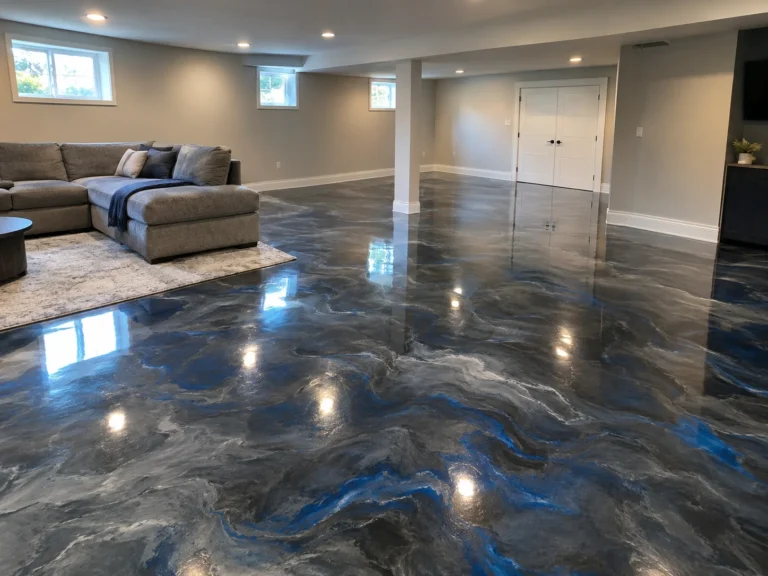
Epoxy is a two-part coating (resin and hardener) that chemically cures into a hard, thick film. Professional 100% solids epoxy bonds well to properly ground concrete and builds serious thickness in a single coat, which is why it’s still the most common base coat in garage floor systems. It’s also the material used for metallic epoxy floors.
Its weak spots are cure time and UV. Epoxy needs several days before it can take a vehicle, and standard epoxy ambers when exposed to sunlight.
What Is Polyaspartic?
Polyaspartic is a type of polyurea coating developed for fast-curing industrial use. It cures in hours, stays clear and color-stable in sunlight, and remains slightly more flexible than epoxy, which helps it handle temperature swings and impact.
The trade-off is working time. Once mixed, polyaspartic may give an installer only minutes to spread it, so it takes an experienced crew to apply evenly. That’s why it’s almost always a professional-only product, and part of why it costs more. Our guide to what a polyaspartic coating is and how it is installed walks through each layer and the install day.
Cost: Epoxy vs Polyaspartic by Garage Size
| Garage size | Epoxy flake system | Polyaspartic flake system |
|---|---|---|
| 1-car (about 250 sq ft) | $1,100 to $2,000 | $1,300 to $2,500 |
| 2-car (about 450 to 550 sq ft) | $1,500 to $3,500 | $2,000 to $4,500 |
| 3-car (about 700 to 900 sq ft) | $2,700 to $5,500 | $3,500 to $7,000 |
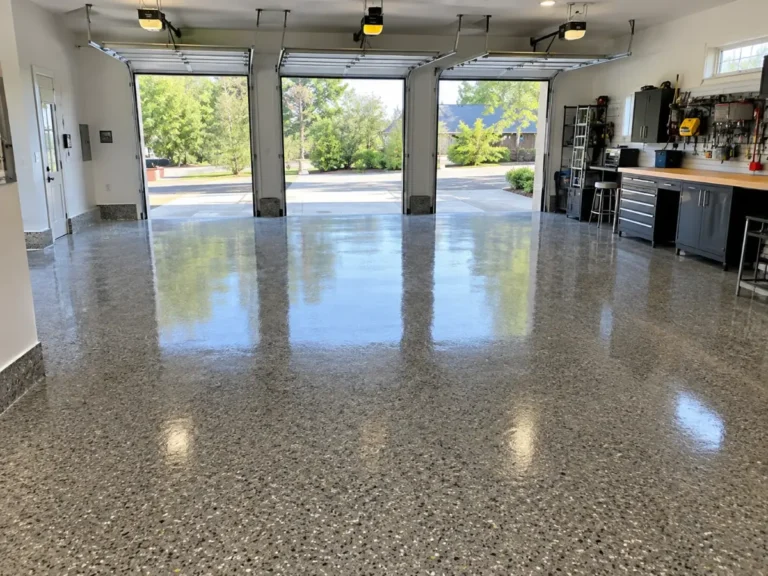
A hybrid system (epoxy base, polyaspartic top coat) usually lands between the two. For full pricing by size, add-ons, and state, see our epoxy garage floor cost guide, or the broader epoxy flooring cost breakdown.
Durability and Performance
- Abrasion and impact. Both systems are very durable when professionally installed. Polyaspartic’s flexibility gives it an edge against chipping from dropped tools and against wear in tire paths.
- Hot tire pickup. A properly installed professional system of either type resists hot tire pickup. The failures you hear about are almost always thin DIY coatings or poor prep, not the chemistry itself.
- UV and sunlight. This is the clearest difference. Polyaspartic stays clear and color-true in sun; standard epoxy yellows. If your garage door is open for hours or the floor gets direct sun, polyaspartic (or at least a polyaspartic top coat) is the safer choice.
- Chemical resistance. Both resist oil, gas, antifreeze, and road salt well once cured.
Which Is Better for Your Climate?
- Hot, sunny climates like Arizona, Texas, Florida, and inland California: polyaspartic or a polyaspartic top coat, for UV stability and heat. See local installers in Arizona.
- Cold and snowy climates like Colorado, Minnesota, and Alaska: polyaspartic’s ability to cure in colder conditions extends the install season, and its flexibility handles freeze-thaw swings. See pros in Colorado.
- Mild, shaded garages: a quality epoxy flake system with a urethane or polyaspartic top coat gives great value.
When to Choose Epoxy
- $You want the lowest cost for a professional floor
- ☁The garage gets little direct sunlight
- 📅You can live without the garage for 3 to 7 days
- ✨You’re planning a metallic finish, which is usually done in epoxy
When to Choose Polyaspartic
- ⏱You need the garage back within a day or two
- ☀The floor gets sun exposure
- ❄You live with big temperature swings or want to install in cold weather
- 🛡You want the longest-lasting top coat and are willing to pay a little more
Weighing the bigger picture first? Our rundown of epoxy flooring pros and cons covers slipperiness, cure time, and other trade-offs that apply to both systems.
Questions to Ask Your Installer
- Is this a full epoxy system, full polyaspartic, or a hybrid? What’s in each coat?
- What’s the total mil thickness?
- How do you prep the floor, and do you test for moisture?
- When can I walk on it, and when can I park?
- What does the warranty cover, including yellowing and peeling?
Compare contractors who offer both systems in our directory by state.
Epoxy vs Polyaspartic FAQ
Is polyaspartic better than epoxy?
For most sun-exposed or high-use garages, polyaspartic (or an epoxy base with a polyaspartic top coat) performs better thanks to UV stability, faster cure, and flexibility. Epoxy is still a great, lower-cost choice for shaded garages.
How much more does polyaspartic cost than epoxy?
Usually $1 to $3 more per square foot, or about $500 to $1,000 more on a typical 2-car garage.
Can you put polyaspartic over epoxy?
Yes. An epoxy base with a polyaspartic top coat is one of the most common professional garage systems.
Is polyaspartic good for DIY?
Generally no. It cures so fast that uneven application and lap marks are common without experience. Most DIY kits use epoxy for that reason, as covered in our DIY vs pro guide.
Does polyaspartic yellow?
No. Aliphatic polyaspartic coatings are UV stable and resist yellowing, unlike standard epoxy.
How long does a polyaspartic garage floor last?
Typically 15 to 20+ years with professional installation and proper prep.
Get quotes for epoxy or polyaspartic
Compare local installers who offer both systems and contact the ones that fit your project. No obligation.
Find Contractors Near Me