
Epoxy Flooring Pros and Cons: What to Know Before You Commit
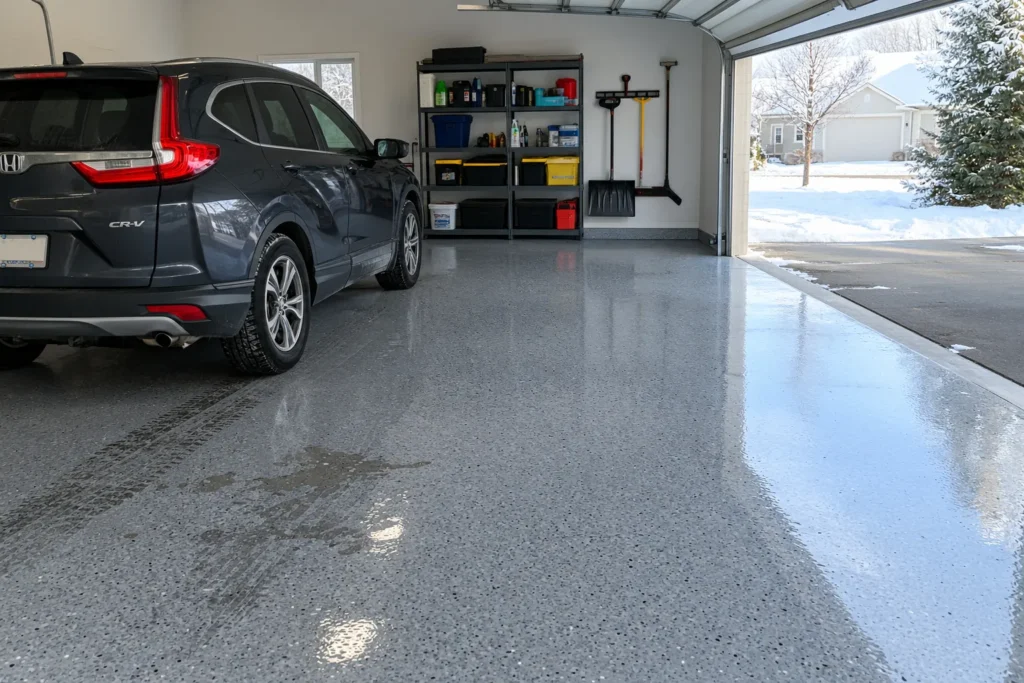
Epoxy flooring is durable, stain resistant, easy to clean, and costs $3 to $12 per square foot installed. The main downsides are slipperiness when wet, the need for careful prep, UV yellowing with standard epoxy, and several days of cure time.
In this guide
Epoxy flooring is tough, good looking, easy to clean, and costs less than most premium floors, which is why it’s the most popular upgrade for garages, basements, and commercial spaces. But it isn’t perfect. It can be slippery when wet, needs careful prep, takes days to fully cure, and standard epoxy can yellow in sunlight.
Here’s an honest look at the advantages and disadvantages of epoxy flooring, and how to decide whether it’s right for your space.
Epoxy Flooring Pros and Cons at a Glance
- 🛡Very durable, 10 to 20 years✓
- 💧Resists oil, chemicals, stains✓
- ✨Easy to clean, seamless✓
- $Affordable per square foot✓
- 🎨Flake, solid, or metallic looks✓
- ☰Seals and protects concrete✓
- ⚠Slippery when wet without texture
- 🔨Prep is critical
- ☀Standard epoxy yellows in UV
- ⌛3 to 7 days before parking
- ❄Hard and cold underfoot
- 🔧Hard to remove later
The Pros of Epoxy Flooring
It’s extremely durable
A professionally installed 100% solids epoxy system is much harder than bare concrete. It handles foot traffic, rolling tool chests, dropped tools, and daily parking for 10 to 20 years when the floor is properly prepared.
It resists stains and chemicals
Oil, gasoline, brake fluid, road salt, and most household chemicals wipe off a sealed epoxy floor instead of soaking in. That’s the main reason it’s standard in auto shops, warehouses, and commercial kitchens.
It’s easy to clean
Epoxy creates a seamless, non-porous surface. A dust mop and occasional wash with a mild cleaner are all it needs, with no grout lines or seams to trap dirt.
It’s affordable compared to other premium floors
Most professional systems cost $3 to $12 per square foot installed, and a typical 2-car garage runs $1,200 to $3,500. See the full breakdown in our epoxy flooring cost guide.
It looks great and comes in many styles
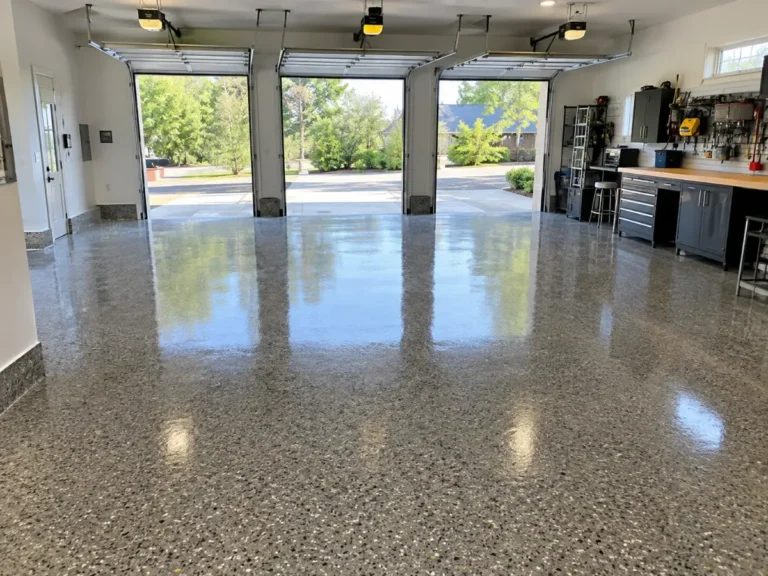
Full-flake, solid colors, metallic swirls, and custom blends mean you can match anything from a practical workshop to a showroom garage.
It protects the concrete underneath
Sealing the slab keeps out moisture, salt, and oil that cause spalling and cracking over time, especially in freeze-thaw climates.
The Cons of Epoxy Flooring
It can be slippery when wet
A smooth, glossy epoxy floor gets slick with water, snowmelt, or oil. The fix is simple: a flake broadcast or an anti-slip additive in the top coat adds grip without changing the look much. Ask for it on garages, entryways, and anywhere near water.
Prep is everything, and it’s where cheap jobs fail
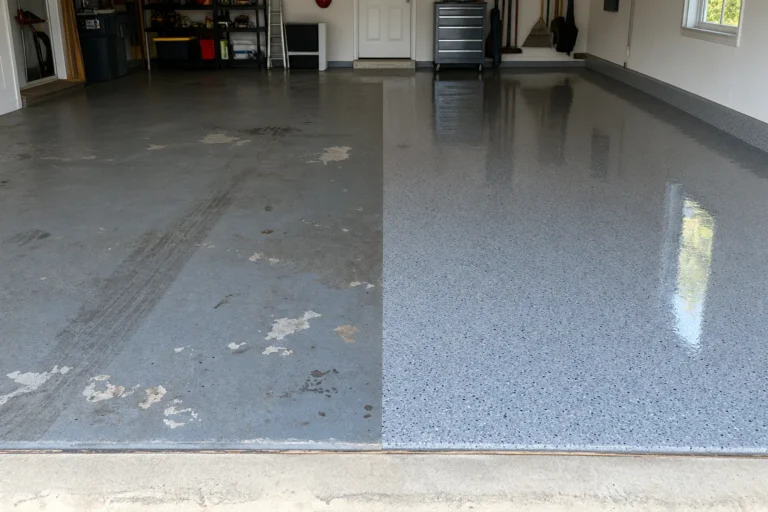
Epoxy only lasts if it bonds to properly ground, clean, dry concrete. Skipped diamond grinding, oil contamination, or undetected slab moisture are the top reasons floors bubble or peel. This is also why most DIY epoxy kits wear out in 2 to 5 years.
Standard epoxy yellows in sunlight
Epoxy isn’t UV stable, so garages with doors open for hours, sunrooms, and outdoor surfaces can amber over time. A polyaspartic or aliphatic urethane top coat solves this.
It takes time to cure
Traditional epoxy usually needs 24 hours for light foot traffic and 3 to 7 days before you can park on it. Polyaspartic systems cut that to the same day for walking and 24 to 48 hours for vehicles, at a higher price.
It’s hard and cold underfoot
Like the concrete beneath it, epoxy is hard and can feel cold. That’s rarely an issue in garages but matters for basements or living spaces, where a rug or radiant heat helps.
It’s difficult to remove
Once bonded, epoxy has to be mechanically ground off to change or redo it, which typically costs $1 to $3 per square foot.
Epoxy vs Other Garage Floor Options
| Option | Installed cost per sq ft | Lifespan | Key trade-off |
|---|---|---|---|
| Professional epoxy/flake | $3 to $8 | 10 to 20 yrs | Needs proper prep and cure time |
| Polyaspartic system | $5 to $10 | 15 to 20+ yrs | Higher cost, fast cure, UV stable |
| Polished concrete | $3 to $8 | 20+ yrs | Less stain resistant in garages |
| Interlocking tiles | $3 to $6 | 10 to 15 yrs | Seams trap dirt and moisture |
| Concrete paint or sealer | $1 to $4 | 1 to 3 yrs | Minimal protection, peels fast |
Is Epoxy Flooring Worth It?
For most garages, yes. The combination of durability, stain resistance, easy cleaning, and moderate cost is hard to beat, and the main downsides (slipperiness, UV yellowing, cure time) all have straightforward fixes when you choose the right system.
Epoxy is a great fit if you:
- Park in the garage daily or use it as a workshop
- Deal with oil drips, road salt, or snowmelt
- Want a clean, finished look that’s easy to maintain
Consider something else if you:
- Need the floor usable within hours and won’t pay for polyaspartic
- Have a slab with serious unresolved moisture problems
- Want a softer, warmer floor for a living space
For garage-specific pricing by size and system, see our guide to what an epoxy garage floor costs.
How to Get the Pros Without the Cons
- Hire an installer who diamond grinds and tests for moisture.
- Ask for flake or an anti-slip additive in garages and wet areas.
- Use a polyaspartic or UV-stable top coat if the floor gets sun.
- Get the full system spec and warranty in writing.
- Compare at least three quotes from local installers on our contractor directory.
Epoxy Flooring Pros and Cons FAQ
What are the disadvantages of epoxy flooring?
The main ones are slipperiness when wet, the need for careful prep, UV yellowing with standard epoxy, several days of cure time, and difficulty removing it later.
Is epoxy flooring slippery?
Smooth, glossy epoxy can be slippery when wet. Flake systems and anti-slip additives add grip and are recommended for garages.
Does epoxy flooring crack?
The coating itself rarely cracks, but if the concrete underneath cracks from settling or soil movement, the crack can show through. Good installers repair existing cracks first.
How long does epoxy flooring last?
10 to 20 years for a professional system with proper prep. DIY kits usually last 2 to 5 years.
Is epoxy better than polished concrete for a garage?
For most garages, yes, because epoxy resists oil and chemical stains better. Polished concrete works well for interiors and showrooms.
Can epoxy be used outdoors?
Standard epoxy isn’t recommended outdoors because of UV yellowing. Polyaspartic or UV-stable systems are better for patios and pool decks.
Ready to get a floor that lasts?
Compare local epoxy and polyaspartic installers and request free quotes. No obligation.
Find Contractors Near Me