
Polyaspartic vs Epoxy: What Manufacturer Data Sheets Say About Garage Floors
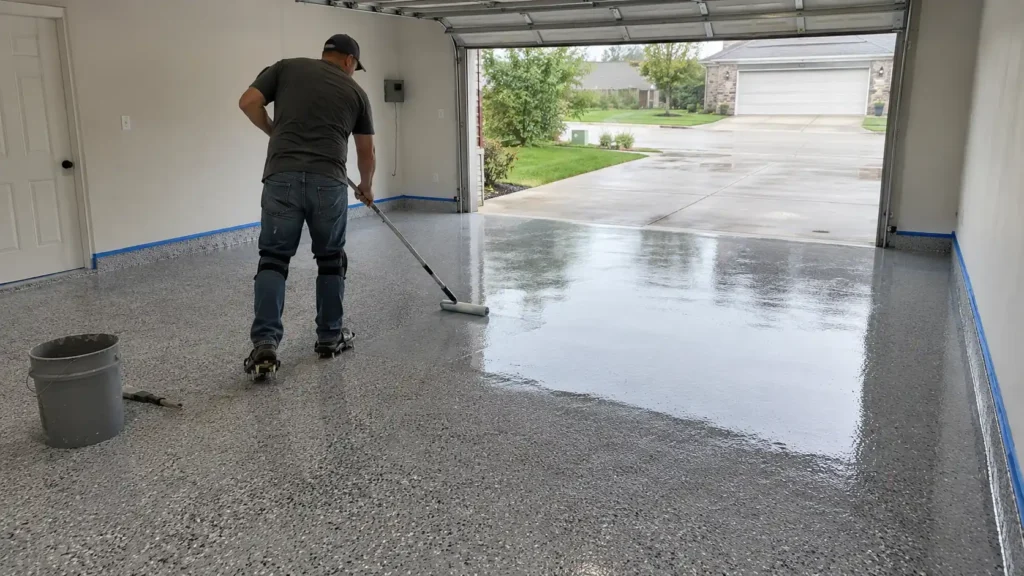
Polyaspartic cures much faster than epoxy (several data sheets allow vehicles after about 24 hours, against roughly 3 to 10 days for epoxy), does not yellow in sunlight, and can be applied in cooler garages. Epoxy gives installers more working time, lays down a thicker film per coat and usually costs less. Many professional floors use both: an epoxy base, decorative flakes, and a clear polyaspartic topcoat.
In this guide
If you are choosing a garage floor coating, you will hear the same two names over and over: epoxy and polyaspartic. Both are two-part coatings that cure into a hard, glossy layer on concrete, and both can look great. They behave very differently on the day of the install and in the years after, though.
This guide compares them on the things that actually decide the choice: how fast you can use the floor, how they handle sunlight, how much working time an installer has, what temperatures they tolerate, and where each one makes sense. Every figure comes from published manufacturer data sheets, listed at the end. If you mainly want prices, our epoxy vs polyaspartic price comparison covers that side in detail.
What Each Coating Is
Epoxy is a two-part system of resin and hardener that cures by chemical reaction into a hard, crosslinked layer. If you want the full explanation of ratios, pot life and cure times, our guide to how a two-part epoxy system works walks through it.
Polyaspartic is also a two-part coating, but it is a type of polyurea, built from different chemistry. It is usually aliphatic, which matters for sunlight, and it is formulated to cure quickly. ArmorPoxy’s polyaspartic data sheet describes its product as a two-component, low-odor coating with excellent UV, chemical and abrasion resistance and a return to service in under 24 hours.
The two are not enemies. The same ArmorPoxy sheet says its polyaspartic is used both as a base coat directly on concrete and as a topcoat over partial or full flake systems.
Side by Side
| Epoxy (100% solids) | Polyaspartic | |
|---|---|---|
| Vehicle traffic | Light traffic in 2 to 5 days, full cure in 5 to 10 days (ArmorPoxy) | About 24 hours (Rust-Oleum Citadel, ArmorPoxy, APF) |
| Pot life, the working time after mixing | 40 to 50 minutes at 77°F (ArmorPoxy) | About 20 to 35 minutes (APF, Citadel, SureCrete) |
| Recoat window | 24 to 48 hours at 68°F (ArmorPoxy) | 2 to 12 hours, then it must be abraded (ArmorPoxy, Citadel) |
| Application temperature | Substrate 50 to 86°F (ArmorPoxy) | 30 to 90°F air, material and floor (ArmorPoxy polyaspartic) |
| UV and sunlight | Can chalk and yellow without a UV-stable topcoat | UV stable |
| Film per coat | 6 to 12 mils, about 100 to 200 sq ft per gallon (ArmorPoxy) | Thinner; one 67% solids product covers 300 to 400 sq ft per gallon per coat (SureCrete) |
These are typical figures for individual products at normal room temperature. Always check the data sheet for the exact product on your floor.
Sunlight: Why Epoxy Yellows and Polyaspartic Does Not
Standard epoxy is built on aromatic chemistry, and ultraviolet light slowly breaks it down. A coatings patent filing notes that certain epoxy coatings do not weather well in sunlight, and that UV exposure can cause a surface change called chalking, which alters color and gloss. Where color and gloss retention matter, it adds, epoxy is typically topcoated with a more weatherable coating such as an aliphatic polyurethane.
In a garage, floors that get direct sun through the door or windows are the most exposed. Polygem’s data sheet for an aliphatic polyurethane topcoat lists epoxy flooring topcoats among its uses and describes the coating as non-yellowing.
Polyaspartics are aliphatic, so they do not carry that weakness. SureCrete’s clear polyaspartic lists more than 95% gloss retention after 2,000 hours of accelerated UV testing. If your garage floor sees direct sun through the door or windows, or you want a light-colored or clear finish that stays that way, this is the biggest reason to choose polyaspartic, or at least to put it on top of epoxy.
Cure Speed: How Soon Can You Drive on It?
This is where polyaspartic wins most clearly. Rust-Oleum’s Citadel polyaspartic and ArmorPoxy’s polyaspartic both list vehicle traffic after 24 hours, with the coating tack free in 2 to 4 hours. APF’s polyaspartic lists light traffic at 4 to 6 hours, vehicles at 24 hours and full cure at about 72 hours.
Epoxy takes longer. ArmorPoxy’s 100% solids epoxy allows foot traffic after 16 to 30 hours, light traffic after 2 to 5 days, and reaches full cure in 5 to 10 days. Rust-Oleum’s water-based EpoxyShield kit allows vehicles after 3 days. All of these figures assume roughly normal room temperature, and cold slows both.
For a homeowner, that is the difference between getting the car back in the garage the next evening and parking in the driveway for most of a week.
Working Time: Why Polyaspartic Is Harder to Apply
Fast curing has a cost. The mixed batch stays workable for a much shorter time. Published pot lives for polyaspartic are about 20 to 30 minutes for APF’s product, 30 to 35 minutes for Citadel and about 30 minutes for SureCrete’s, compared with 40 to 50 minutes at 77°F for ArmorPoxy’s 100% solids epoxy. Heat shortens the polyaspartic window further: APF warns that working life is considerably shorter above 90°F, and Simiron sells fast, medium and slow versions of the same polyaspartic so installers can match the product to the weather.
The recoat window is tighter too. ArmorPoxy’s polyaspartic allows recoating 2 to 12 hours after the first coat, and the surface must be abraded and cleaned if that time passes. In practice, this is why polyaspartic is mostly a professional product. A single person rolling a large floor with a 30 minute pot life can easily run out of time.
Temperature: A Cold Garage Favors Polyaspartic
ArmorPoxy’s polyaspartic lists application when air, material and floor temperatures are between 30 and 90°F, and SureCrete’s lists 32 to 90°F. ArmorPoxy’s 100% solids epoxy limits the substrate to 50 to 86°F. If you have an unheated garage in a cold climate and want the job done in late fall or early spring, polyaspartic gives installers more room. Neither is a good choice on a slab that is damp or below the dew point.
Moisture and Prep: The Same Rules Apply
Switching to polyaspartic does not fix a wet slab or a poorly prepared surface. Both coatings need clean, sound, dry concrete that has been ground or otherwise profiled, and both fail when moisture pushes up from below. If your concrete has moisture issues, read our basement floor coating cost guide before choosing any coating.
The Best Answer Is Often Both
Most professional garage floors are systems, not a single coating. A common build is a pigmented epoxy or polyaspartic base coat, decorative flakes broadcast into the wet base, and a clear polyaspartic topcoat. The epoxy base adds thickness and bonds to the slab, and the polyaspartic topcoat adds UV stability and a fast return to service. ArmorPoxy lists its polyaspartic for use as a topcoat over broadcast systems. To see what each of those layers does on the day, read how a polyaspartic floor is installed.
If a contractor quotes a flake system, ask what the base coat is and what the topcoat is. A floor with an epoxy topcoat and no UV-stable layer may yellow in sunlight.
What About Cost?
Polyaspartic usually costs more per square foot than epoxy, and most quotes bundle prep, base coat, flakes and topcoat into one system price rather than pricing each layer. Because prices vary by region and by how the job is built, we keep the numbers in one place: our polyaspartic vs epoxy price comparison breaks them down, and the garage floor coating cost guide shows what typical garages cost.
DIY or Professional?
Epoxy is the more forgiving of the two for a first-time installer, because of its longer working time and slower cure. Polyaspartic gives you roughly 20 to 35 minutes of pot life on the data sheets above, a short recoat window, and less time to fix mistakes. Many retail kits, such as Rust-Oleum’s EpoxyShield, are epoxy-based. If you are weighing a weekend project against a hire, our DIY vs professional comparison covers the trade-offs, and our pros and cons of epoxy floors post covers the downsides honestly.
Which One Should You Choose?
- Choose polyaspartic (or a polyaspartic topcoat) if the floor gets direct sunlight, you need the garage back quickly, you are installing in cool weather, or you want a clear or light color that stays that way.
- Choose epoxy if budget matters most, the garage is shaded and indoor, and you can wait several days before parking on it. A UV-stable topcoat is still worth considering.
- Choose a hybrid system (epoxy base, flakes, polyaspartic topcoat) if you want the thickness and value of epoxy with the sun resistance and fast return of polyaspartic. This is the most common professional build.
Whichever you pick, the contractor matters as much as the coating. Ask for the product data sheets, the base and topcoat chemistry, the number of coats, and how they will prep and moisture-test the slab. When you are ready to compare, you can find garage floor coating contractors by state.
Frequently Asked Questions
Is polyaspartic better than epoxy?
It depends on the job. Polyaspartic cures faster, resists UV yellowing and can be applied in cooler temperatures, but it has a shorter working time and usually costs more. Epoxy gives installers more working time and a thicker film per coat. Many professional floors use an epoxy base with a polyaspartic topcoat.
How long does polyaspartic take to cure compared with epoxy?
Several polyaspartic data sheets list vehicle traffic after about 24 hours. ArmorPoxy’s 100% solids epoxy lists light traffic after 2 to 5 days and full cure in 5 to 10 days, and Rust-Oleum’s water-based epoxy kit allows vehicles after 3 days.
Does epoxy turn yellow in the sun?
Standard epoxy can. Ultraviolet light breaks down its chemistry over time, causing chalking and a yellow shift, which is why epoxy is often topcoated with a UV-stable layer such as polyaspartic or aliphatic polyurethane. Polyaspartic is aliphatic and does not yellow in sunlight.
Can you put polyaspartic over epoxy?
Yes. It is a common build: an epoxy base coat with flakes, finished with a polyaspartic topcoat. The surface must be clean and, depending on timing, may need to be abraded before the topcoat goes on, so follow the product data sheet.
Is polyaspartic or epoxy better for a cold garage?
Polyaspartic is more tolerant of cold at install time. ArmorPoxy’s polyaspartic lists application between 30 and 90°F, while its 100% solids epoxy limits the substrate to 50 to 86°F. Always follow the temperature limits on your product’s data sheet.
Can I apply polyaspartic myself?
It is difficult. Published pot lives are about 20 to 35 minutes and the recoat window can be as short as 2 to 12 hours, so a single person can easily run out of working time on a large floor. Most homeowners hire a professional for polyaspartic.
Sources
- ArmorPoxy ArmorGarage Polyaspartic 80 technical data sheet (under 24 hour return to service, base or topcoat use, 2 to 12 hour recoat, 30 to 90°F application)
- Rust-Oleum Citadel UL 80 polyaspartic technical data (30 to 35 minute pot life, 2 to 4 hour tack free, 24 hours for vehicle traffic)
- APF Polyaspartic 7500 Low Odor product data sheet (20 to 30 minute pot life, traffic times, heat shortens work life)
- SureCrete Dura-Kote DK 120 polyaspartic (pot life, 32 to 90°F application, coverage, gloss retention)
- Simiron Polyaspartic HS technical data (fast, medium and slow versions, heat and humidity shorten pot life)
- ArmorPoxy ARM707X-CM 100% solids epoxy technical data sheet (pot life, recoat window, cure schedule, coverage, temperature limits)
- Rust-Oleum EpoxyShield technical data (vehicles after 3 days)
- US patent 8,809,468, epoxy siloxane coating compositions (epoxy chalking in sunlight, aliphatic polyurethane topcoats)
- Polygem 738 UVR Gloss aliphatic polyurethane topcoat (non-yellowing aliphatic topcoat, listed for use over epoxy flooring)


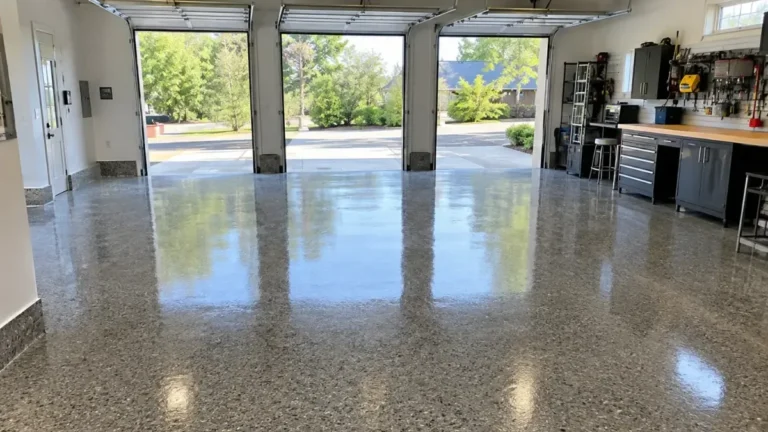
Ready for a floor that lasts?
Compare local epoxy flooring contractors and contact the ones that fit your project. No obligation, no call centers.
Find Contractors Near Me